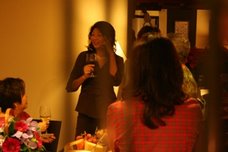
Ushering the New Year entails some celebration. There’s always renewed hope for a better year and there is clamor for the traditional New Year’s “luck foods”, supposedly to bring more good fortune and happiness for the coming year. Along with cabbage, rice, ham and black-eyed peas, to foods that are gold in color to round in shapes, abundance of food on the celebratory table is a tall order of the day.
 The first in the list is the practice of eating "ring-shaped" and “golden” foods during New Year's celebrations. Symbolizing the "coming full circle," the belief is that good luck will follow all who munch such foods. The loads of fruits and sweets, even balls of cheese may open your good fortune this midnight of December 31.
The Thais wil l go for 3 native delicacies made for the sweet tooth: foy thong; thong yip; and thong yot. Made from five simple ingredients - coconut cream, coconut meat, rice flour, palm sugar and eggs; the thong (meaning gold) symbolizes prosperity and wealth. Who doesn’t want that? So, go grab these precious looking sweets and slide through the New Year. They are mostly available in the talaad (market places), although my best bet is the Otoco market (50B up/per pack). The easiest way is the MRT to Kampheang Phet station.
For those who prefer a traditional New Year meal “Japanese Style", Tsu welcomes the year right with a symbolic feast (JW Marriot; Tel: 02 656 7700). It begins with “Otoso” - traditional Japanese sw eet sake to rev up the appetite. Osechi Ryouri, the festive meal comes with five different kinds of sashimi, followed by three kinds of main dishes (Kobe beef amiyaki with Japanese mushroom, Hokkaido taraba crab tempura with creamy mayo sauce and five different kinds of sushi), and served with “Ozoni” (New Year’s special soup). Finale to the meal would be the refreshing fruit sorbet served in its skin cup. The meal symbolizing long life, good health and happiness, is available this New Year (lunch and dinner from January 1 - 3, 2008 only, 4,500 B/person).
PORK ROAST WITH SAUERKRAUT
3 jars sauerkraut
3-4 lbs. pork roast (boneless)
4 strips of bacon
3-4 dried juniper berries (optional)
1 tsp caraway seeds
1 medium onion, chopped
1 medium apple, chopped
250 ml apple juice or wine
250 ml water
Place bacon on bottom of large pot, cover with 1/2 of sauerkraut, add pork roast, then the other 1/2 of sauerkraut, then top with onion and apple. Add liquid.
Cook over low heat for 1 ½ hours, till the meat is tender.
- At the strike of midnight, eat 12 grapes signifying each month of the upcoming year. If the grape for the respective month is sweet, expect a good month… if it's sour, a bad one.
- Munching on noodles denotes a long life; an old superstition says that it's bad luck to cut them.
- Feast on fish. Some not only will they gorge on it, but will also place several of the fish's scales in their wallets as a way to ensure financial wealth. In Chinese, "Yu" (fish) sounds like the words for wish and abundance. As a result, on New Year's Eve it is customary to serve a fish at the end of the evening meal, symbolizing a wish for abundance in the coming year. For added symbolism, the fish is served whole, with head and tail attached, symbolizing a good beginning and ending for the coming year
- Spring Rolls symbolize wealth because their shape is similar to gold bars.
- Tangerines and oranges are not only golden but round and aplenty this time of year. Used them as centerpiece on you table before eating them and bring in the vibe!
- Finally, steamed sticky rice cakes have a symbolic significance. Their sweetness represents a rich sweet life, while the layers stand for rising abundance for the coming year.
In many cultures, it's believed that you can affect your luck by the type of food you first eat on New Year's Day, those that will drive away bad luck and bring in good fortune. Yet it is the hovering spirit of togetherness, which matters most, stirring the feasts where the symbolic foods inspire a sweet beginning for an auspicious year. Happy New Year!